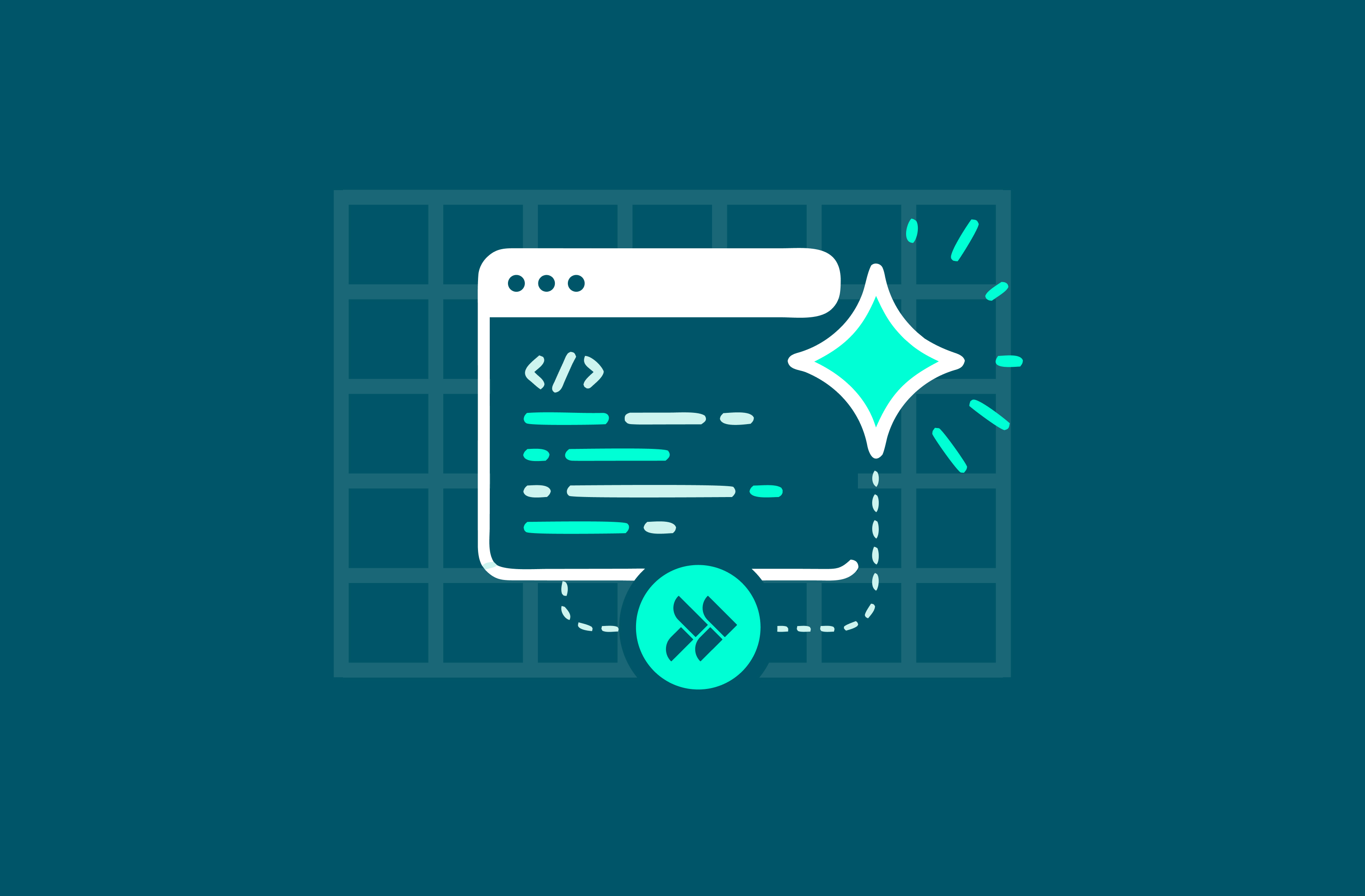
Today, we're launching the Pave MCP Server, a live link from your AI coding agent to Pave's official API documentation, so you can go from zero to a working integration in a few hours.
If your team uses Claude Code, Cursor, Windsurf, or Codex, you can now point your AI agent at Pave and have it read our documentation and write integration code grounded in the canonical, up-to-date Pave docs, all without leaving your development environment.
The integration tax kept fintech bundled
Until now, fintech didn't consolidate because one vendor was best at everything. It consolidated because switching was painful.
When integrating a new data partner meant weeks of engineering time and brittle code, you took the easy button. If your open banking provider had a cashflow score, you used it. Not because it was the best score. Because the alternative was a sprint.
MCP removes that tax. When connecting a new data partner takes a day instead of a month, the bundle stops making sense. Use the best cashflow signal, the best scoring layer, the best monitoring tool — and switch when something better comes along.
The era of "good enough because it's already plugged in" is over.
What changes with the MCP Server
Your AI agent becomes a Pave integration expert with access to up-to-date docs, from the moment you configure the MCP server.
- No more copy-pasting documentation into your LLM. The agent fetches pages on demand, directly from the source.
- No more debugging code written against inferred response shapes. Every endpoint, header, and payload is read from the canonical Pave reference.
- No more starting from scratch when a new engineer joins the project. Anyone with the MCP configured gets the same integration expertise on day one.
- Always current. The MCP server serves the latest version of our docs, so your agent will never work against a stale schema.
Most of the developers we talk to are already using an AI coding agent. The MCP server meets them where they already work, and turns the integration from a multi-day project into something a single engineer can finish in an afternoon.
Why we built this
We could have spent this engineering cycle on a dozen other things. We chose the MCP server because it reflects something we believe about how modern financial infrastructure should work: the cost of adopting high-leverage software should approach zero.
The teams winning right now aren't the ones with the prettiest API reference. They're the ones whose tools slot into how developers already build (in the IDE, alongside the AI agent, inside the pull request) and stay out of the way.
For us, that translates into two principles we hold ourselves to:
- Move at the pace of our customers, not the pace of a legacy product cycle. When a risk team decides to ship cash flow scoring on Monday, our job is to make Friday a realistic launch date.
- Work intimately, not transactionally. We sit in our customers' Slack channels. We learn the shape of their portfolio. We tune scoring with them, not at them.
The MCP server is the developer-facing expression of that posture. It compresses the integration loop from days of doc-juggling into a single afternoon, through the tools developers already trust. The faster you can prove out an integration, the faster we can get to the work that actually moves the needle: refining the model against your data, your portfolio, your underwriting decisions.