
How Self Lifted First-Advance Repayment Using a Score Built for Its Book
Self launched SelfCash on Pave's Cash Advance Score and beat its repayment target in the first months. Then it decided to open the product to the general public, and Dan Cochrane, who runs credit for SelfCash, named the bar he needed to clear to get there safely: first-advance repayment in the mid-80s, with a reasonable trade off on approvals. Pave fine-tuned a custom version of the score on Self's own advance history that cleared that bar at the recommended cut. Dan rebuilt the model independently to check the result before trusting it.

Challenge
Self got SelfCash off the ground the sensible way. It launched to its own members first, underwritten on Pave's Cash Advance Score, the network score trained on repayment outcomes across cash advance providers. That launch set a first-advance repayment target, and Self beat it by several points.
That success created the next problem. Self planned to open SelfCash to the general public in August 2025, and an open-market applicant is not a Self member. On a July call with Pave, Dan Cochrane, Director of Credit Strategy, put a bar on what the public launch required: first-advance repayment in the mid-80s, with as little approval loss as possible. Clearing the next one meant going a level deeper, fine-tuning the score on Self's own advance history so it could read that book's specific applicants, advance amounts, and repayment terms.
Solution
The design choice was to fine-tune the Cash Advance Score on Self's own book, fit to the exact repayment event Self underwrites. Just as important was how it got built. The target and its measurement were defined together, the work was checked by Self at every step, and the model went through Self's own Model Risk review before it carried a single decision.
The build. Self shared its underwriting and collections history, hundreds of thousands of unique events across the product’s life. A Pave data scientist trained a custom model on that history, blended with repayment outcomes from other providers on the Pave network, to predict repayment within 30 days of disbursement.Training concentrated on first-time advances, where the riskiest applicants and the sharpest patterns live.
The readout, checked line by line. At the September results call, the collaboration was visible in the details. When Pave's observed repayment rates came in a couple of points below Self's internal figures, Dan and Pave's data scientist traced the gap live to a denominator filter on advances without 30 days of maturity. The headline result, 0.76 AUC for the custom score on the holdout set against 0.59 for the network score, landed differently than a vendor claim usually does. Dan's own quick models had been hitting 0.75, so Pave's number matched what he'd already found in the data.
Self checked the work before using it. Pave handed back the full dataset with model scores appended and a flag marking which records were in the training population, so Dan could evaluate his existing underwriting strategy against the new score on data he trusted. Self's Model Risk team then reviewed the model's attributes and flagged two. With Self's launch date bearing down, Pave turned around the adjusted model and rescored dataset in days, confirming the removal cost nothing in the AUC. The model shipped as it passed governance, not before.
Deployed to be tested, not trusted. The score went live in early October on Self's existing production endpoint, called by a model ID, so Self could run it in shadow or parallel against the network score before it carried decisions. Self's risk leadership summed up the rollout in one word: ASAP, because shadow scoring could collect evidence while Dan finished his strategy analysis.
And supported like a shared system. When Self's team flagged that live score distributions looked different from the backtest a few weeks after launch, Pave treated it as its own production incident. Pave's data science team responded the same morning, met with Self's team within a day, and the two teams traced it together to an integration setting on Self's side. Self's engineers modified the integration that handled incremental uploads, Pave reprocessed the affected scores and added new data monitoring to catch that class of issue earlier, and the fix fed the next iteration of the model. Nobody spent a week arguing about whose problem it was.
Results
First-advance 30-day repayment rose from the mid-70s into the mid-80s at the chosen cut, on the score built on Self's own advances. Dan had named the mid-80s as the bar the public launch needed. The score cleared it.
The result held up under Self's own scrutiny rather than arriving as a claim. Dan's independent rebuild landed around 0.75 AUC, within a point of Pave's 0.76 on the holdout, and Self's Model Risk team reviewed and approved the attributes before launch. The lift landed where Self needed it most, on first-time advances, and both teams confirmed it persisted on second and third advances rather than fading after the first.
Sharper risk separation is not a cosmetic number. It is the input Self uses to decide who to approve and how much to advance, which is why Self's leadership pointed the result directly at smarter line assignment and dollar loss performance. By December, with the score in production, Dan reported strong performance and significant progress on the portfolio. Over that same stretch, SelfCash disbursements demonstrated evidence of successful repayments, and Self began planning to ramp acquisition back up.
Conclusion
Pave's Cash Advance Score got SelfCash launched and past its first repayment target. Opening the front door to the public took the next step, a version of the score fine-tuned on Self's own book, and a team to build it, prove it, and run it with Self. The target came from Dan, the validation came from his own rebuild and Self's Model Risk review, and the model came from Pave, trained on Self's advances and the repayment behavior of the wider network.
The work continues as SelfCash grows and the applicant mix shifts, which is where risk models drift. Pave monitors the model and retrains as needed, Self feeds underwriting and collections outcomes back through the API, and the separation that cleared the launch target keeps getting checked against live repayment data.
See what a score built for your book can do
Off-the-shelf scores you can deploy today, sharpened by every lender on the network.
Explore Use Cases
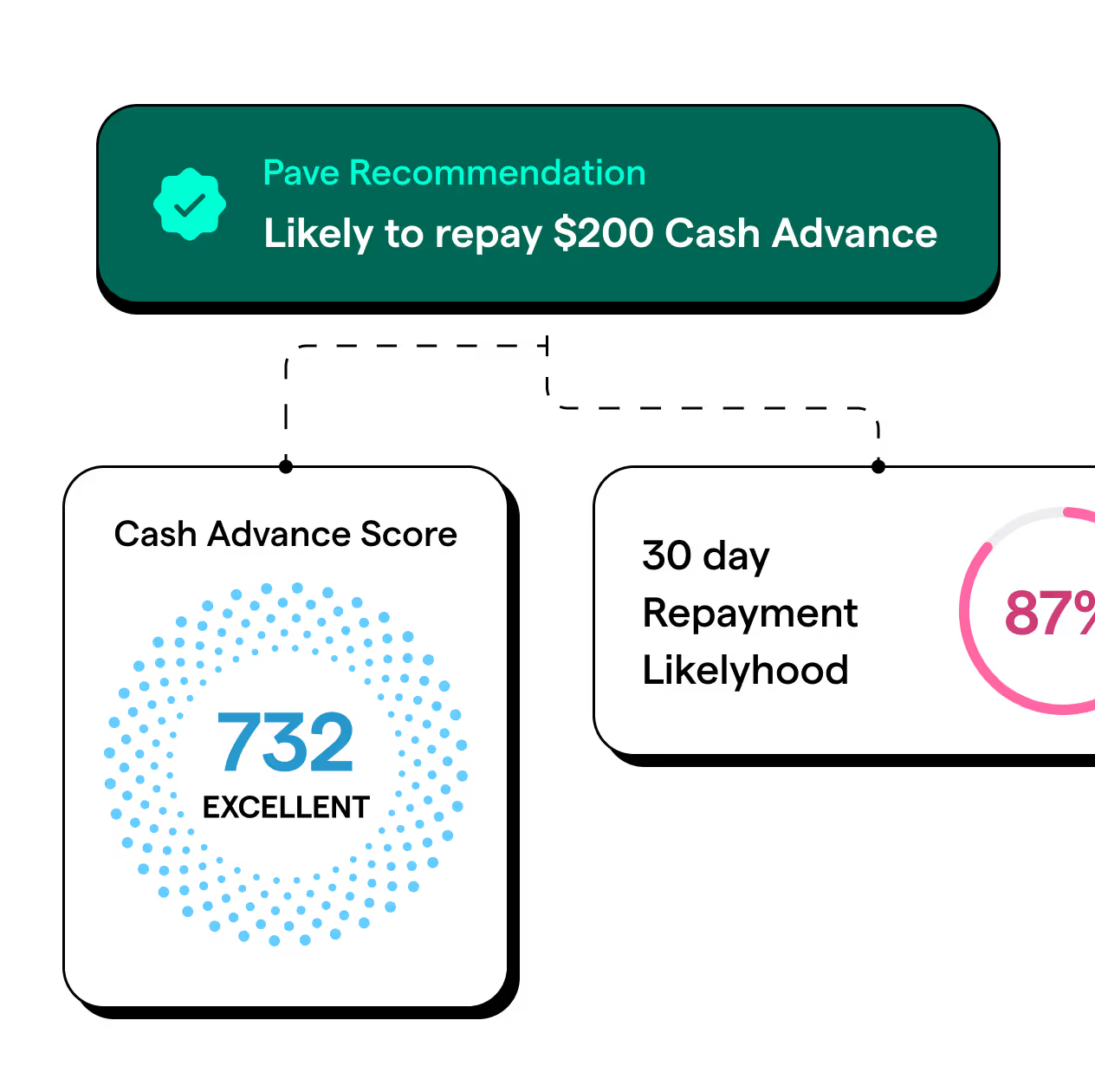
Cash Advance
Score users to increase approvals, advance amounts, and improve repayments.
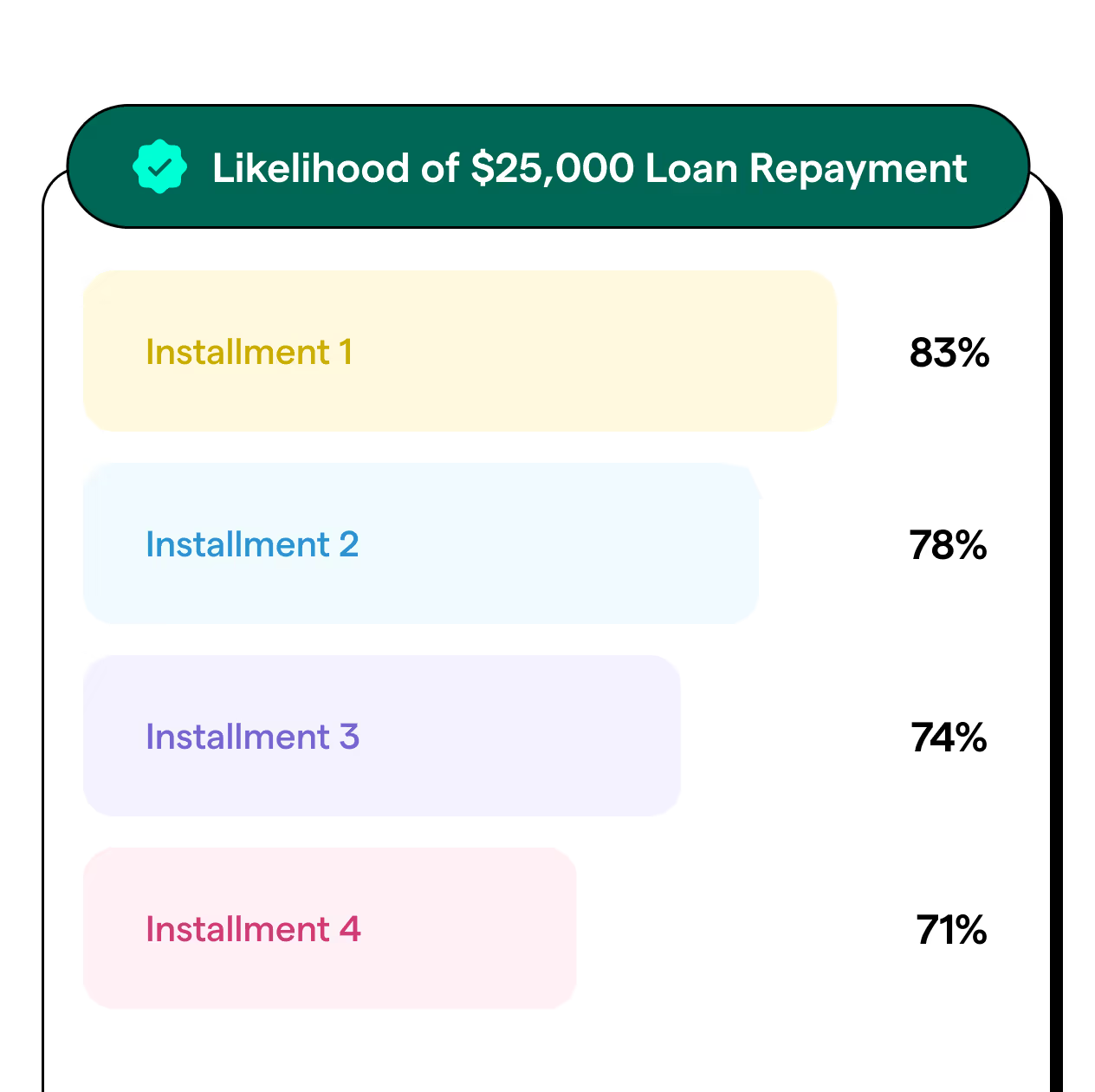
Personal Loans
Identify users with high likelihood of making the first 4 payments to reduce delinquencies.
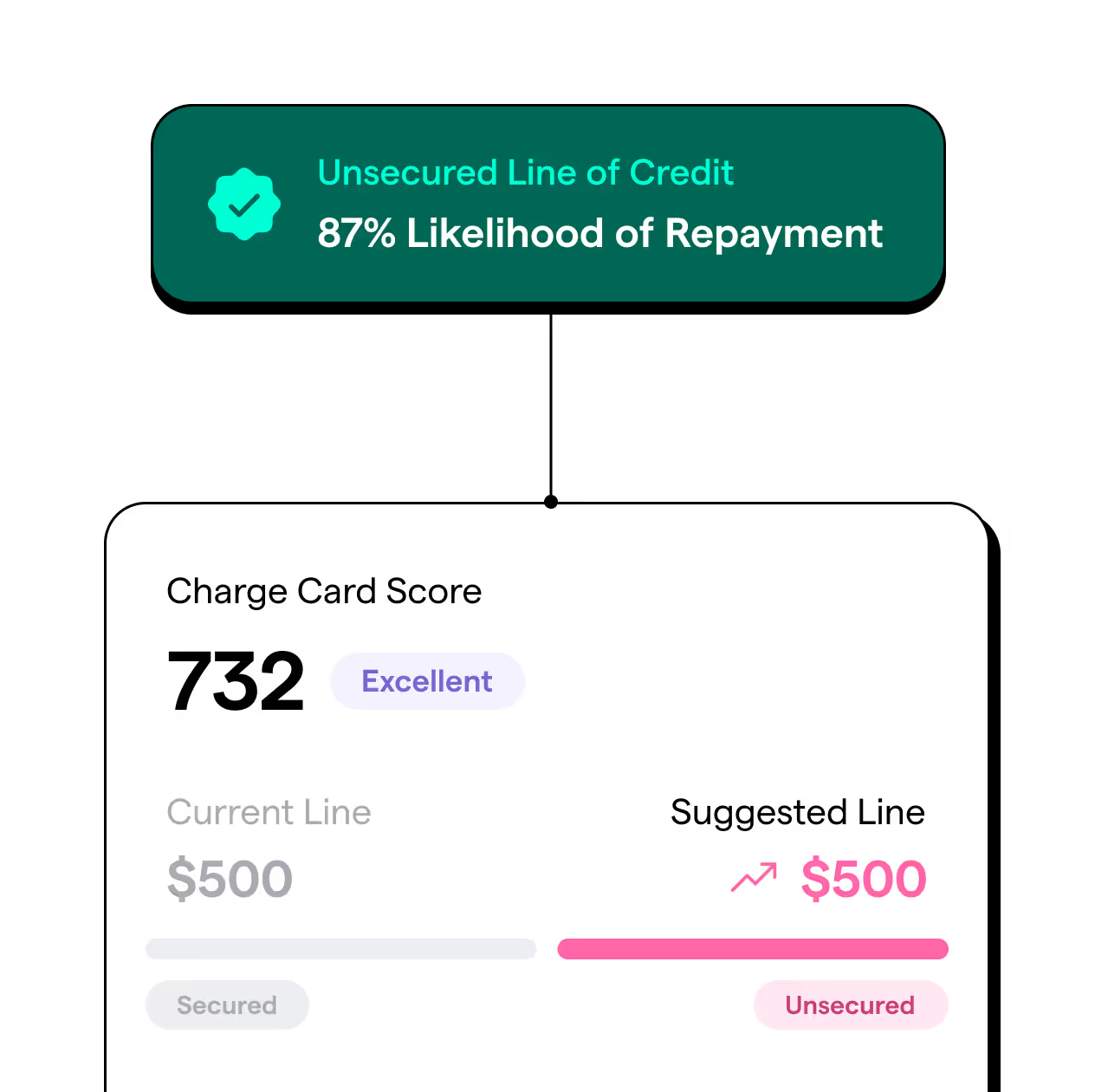
Charge Cards
Graduate users to higher secured or unsecured limits based on increased affordability.
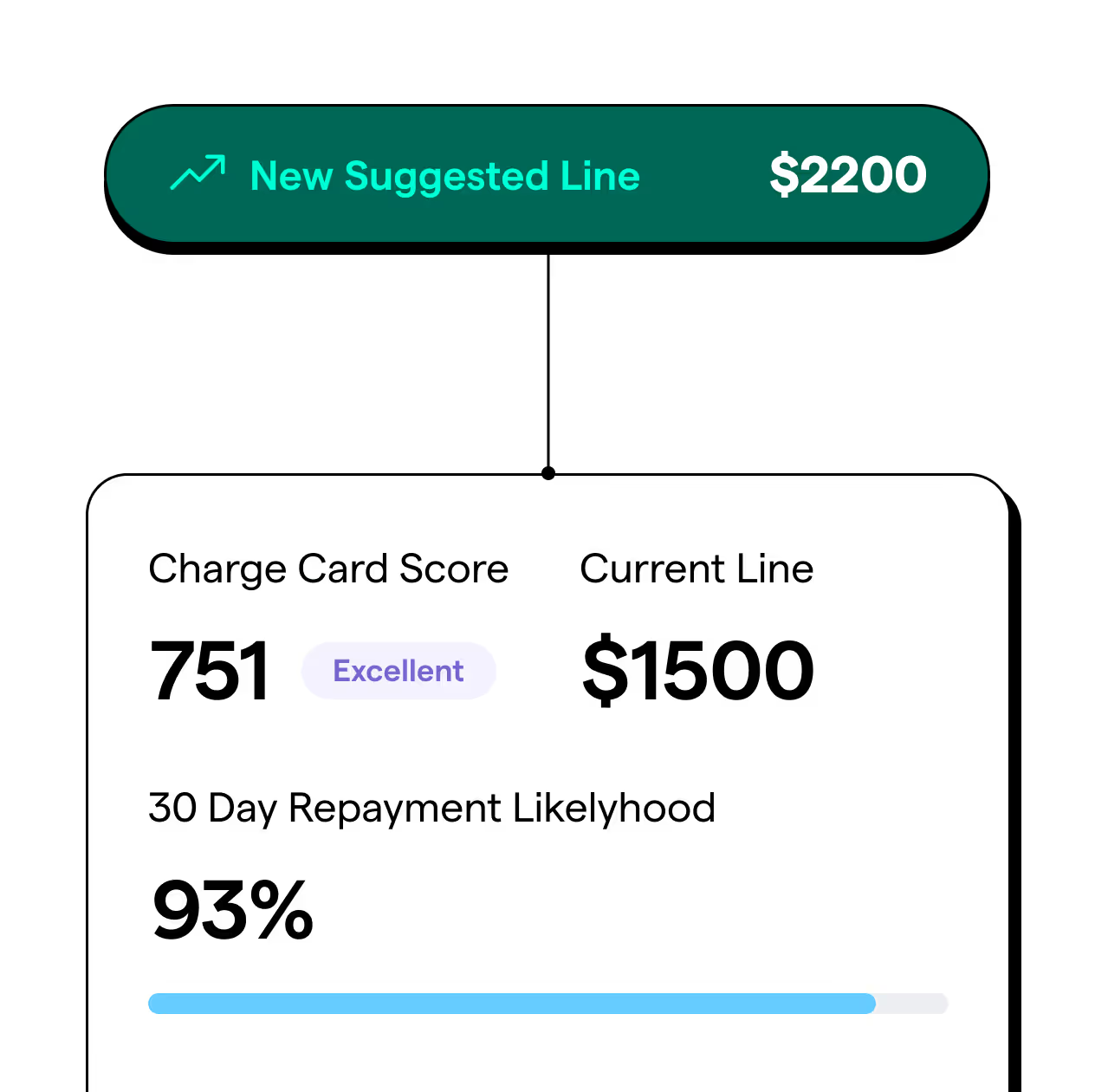
Credit Cards
Set dynamic credit limits based on users' income and affordability.
Drive growth with Cashflow-driven Analytics
Use our Cashflow-driven Attributes and Scores to provide timely, borrower-specific insights tailored to your lending criteria. Make informed decisions that enhance approval rates and loan performance.